

Elevate Your Game: How Sleeping Upright Can Help with OSA
December 17, 2025
When you have sleep apnea, one of your main goals is likely to simply get a good night’s rest. To that end, many patients are willing to try nearly anything if it works. Unfortunately, however, many options simply aren’t effective, are habit forming, or are downright dangerous. The good news is that one easy trick could help you get a more peaceful night with almost no effort!
What is Sleep Apnea?
Sleep apnea is a disorder that occurs when breathing repeatedly stops and restarts during sleep. There are two main types: obstructive sleep apnea (OSA) central sleep apnea (CSA). OSA happens when the throat muscles relax and block the airway, which causes the patient to pause their breathing and can take place anywhere from a few seconds to a few minutes. CSA occurs when the brain doesn’t receive the proper signals to continue breathing while you sleep.
Upright Citizens
If you’re struggling to get to rest comfortably with sleep apnea, research has shown that in addition to when and where you sleep, how you do it matters, too. In fact, a 2017 study found that elevating your head just 7.5 degrees could ease OSA symptoms and allow for a more restful night. Other studies conducted in 1986 and 1997 found that a 30- or 60-degree elevation also helped patients improve the quality of their sleep.
Why Does Elevation Help with Sleep Apnea?
The science behind why elevating your head helps you sleep better makes sense when you think about OSA. You see, it’s caused by a blockage to the airway, which can be narrowed due to excess weight, enlarged tonsils, or even a fatty tongue. When you sleep with your head slightly upright, this puts less pressure on the airway, allowing you to breathe more efficiently and reducing the signs of OSA.
How to Get Elevated
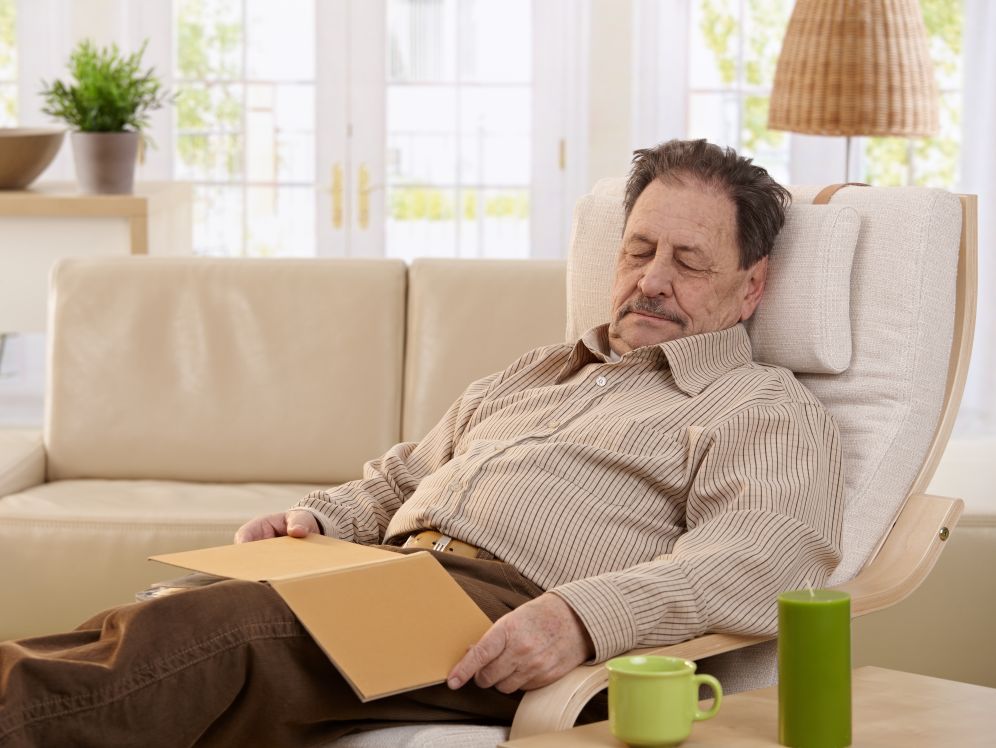
While some patients may have the budget for an adjustable bed, for others the use of extra pillows or even a soft reclining chair may help give your head the elevation it needs. In addition to changing your position, it is important to seek help from a trained sleep professional. Although many patients are unhappy with traditional therapies like CPAP, your sleep dentist can often provide solutions you may not have considered, including oral appliance therapy. These devices are custom made to fit your individual mouth and can position your airway open naturally so you don’t need to wear a mask and take in forced air to get rest. Most patients find them much more comfortable than CPAP and are also a lot more likely to wear their orthotic as prescribed.
Remember, if you have OSA, it can be difficult to get the rest you need. Tips and tricks like sleeping with your head elevated may help improve symptoms, but it’s still very important that you work together with your dentist to monitor your condition and find a comfortable, effective solution. To learn more about sleep apnea treatment, schedule a consultation with your dentist today!
About Dr. Romack
Dr. Deborah Romack earned her dental degree from Baylor College of Dentistry and has since then taken numerous courses in treating airway obstruction, snoring, Obstructive Sleep Apnea (OSA) and upper airway resistance syndrome (UARS). She is a current member of the American Academy of Dental Sleep Medicine, the American Dental Association, Texas Dental Association, Fort Worth District Dental Society, International Association for Orthodontics, American Academy of General Dentistry.
No Comments
No comments yet.
RSS feed for comments on this post.
Sorry, the comment form is closed at this time.